

In this era, exhibition spaces often favor bright, airy designs that allow visitors to comfortably admire works of art or historical artifacts. Walking around, we often see exhibits framed or placed in glass glazing. But does placing valuable artworks or important artifacts in glass cases truly protect them from one of the greatest threats: ultraviolet (UV) rays in light?
In this article, Hoa Ta VG-Lab will discuss the effects of UV rays on artworks and valuable artifacts.
How do UV rays affect exhibited artifacts?
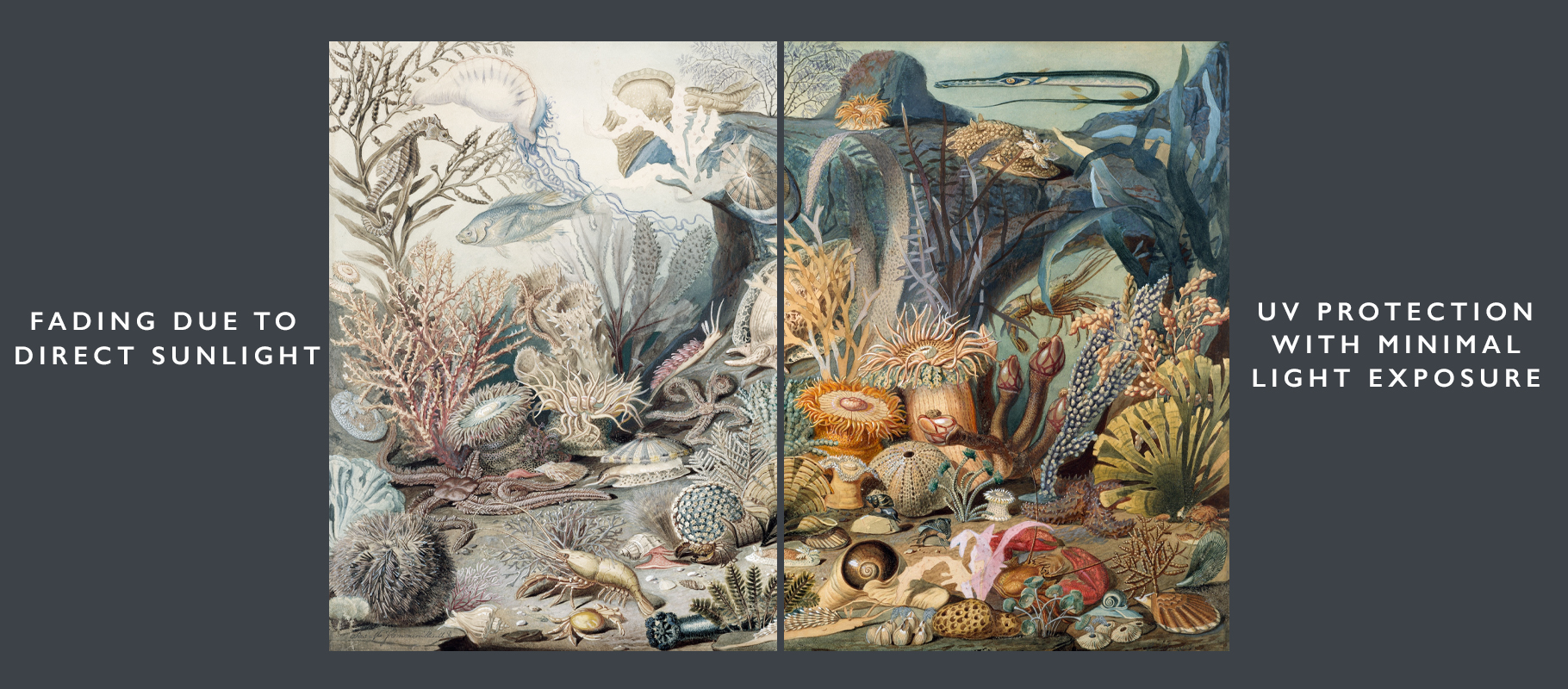
Unlike easily noticeable damage such as scratches or dust, the effects of UV rays can only be detected after they have gradually damaged the artwork over a long period of time. This is because ultraviolet radiation breaks down pigment molecules and weakens the durability of the materials used to create the artwork (especially sensitive materials such as paper, silk, etc.). Over time, the surface of the material gradually shows the following signs of deterioration:
- Fading colors.
- Yellowing paper.
- Reduced contrast in photographs.
- Peeling and cracking occur.
Once these phenomena are visible to the naked eye, it is nearly impossible to restore the artifact to its original condition.
Therefore, “prevention is better than cure”; mounting in frames or installing glass display cases serves a protective purpose, minimizing harm to the artwork. Rather than attempting to restore the artwork once it has deteriorated, we should prevent such deterioration from occurring in the first place
How to Protect Artifacts from UV Rays
To minimize the impact of UV rays on valuable artworks and artifacts, here are some methods you can use:
- Place artworks and artifacts on display in areas not exposed to direct sunlight.
- When selecting a location to display an artwork, consider the amount of natural light the room receives.
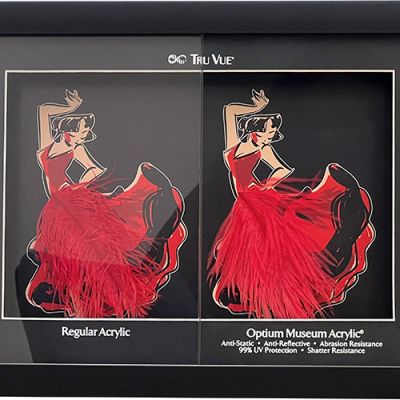
- Use glass or acrylic that blocks UV rays to prevent artwork from fading.
Important note: While UV rays are the primary cause of fading, other factors such as humidity, temperature, dust, the material of the displayed artifact, and the picture frame also affect preservation. No type of glass can provide absolute protection against the risk of fading or damage; however, using museum-grade glass or acrylic within the frame will help minimize one of the most common causes of damageảo tàng trong lồng khung sẽ giúp giảm thiểu một trong những nguyên nhân gây hư hại phổ biến nhất.
Is all UV protection the same?
Although UV rays are considered a common cause of fading and damage, not all glass materials provide the same level of protection.
In the framing industry, a product must block at least 97% of UV rays in the 300nm to 380nm wavelength range to be considered museum-grade. Industry guidelines and museum standards have established this threshold as the appropriate level for preserving artwork, photographs, documents, and valuable artifacts.
Some glass products may block up to 92% of UV rays, while museum-standard products block up to 97%, and premium-grade products can block up to 99%. Although the difference between 92% and 99% may seem small, it indicates that the amount of UV rays that can penetrate and affect the artwork differs by a factor of 8 between the two products. This highlights the importance of custom framing.
Solutions from Hoa Ta VG-Lab
To protect works of art and valuable artifacts from the effects of UV rays, Hoa Ta VG-Lab is pleased to introduce the Tru Vue Optium Museum Acrylic. This product blocks up to 99% of UV rays and offers superior clarity, making it the ideal choice for protecting your valuable artworks and artifacts.