

When you place a valuable photograph, limited edition print, or original watercolor behind glass in a frame, it is easy to assume it is permanently safe. The glass shields it from dust and accidental touches, and the frame holds it tightly.
However, in fine art conservation, a frame can actually become a slow-motion destructive chamber if the internal materials are chosen incorrectly.
Among all framing components, the mountboard (also known as a matboard, window-mount or passe-partout) is often treated as purely decorative—a white border to draw the eye inward. In reality, the mountboard serves as the primary structural and chemical shield for your artwork.
The Hidden Dangers Inside a Standard Frame
1. Direct Glass Contact & Thermal Condensation
In Vietnam’s humid tropical climate, temperature fluctuations between air-conditioned rooms and warm ambient air cause invisible condensation inside glass panels.
If artwork is framed without a mountboard (or with an ultra-thin border), the print rests directly against the glass. Over time, moisture traps between the paper and glass, causing:
Emulsion Adhesion: High-gloss photo prints and delicate inks fuse to the inner glass surface, making removal impossible without tearing the artwork.
Mold & Foxing Growth: Trapped moisture creates an ideal breeding ground for microscopic fungi, resulting in permanent brown foxing spots.
How Mountboard Protects: A properly cut mountboard acts as a physical spacer, creating an essential air cavity between the glazing (glass/acrylic) and the artwork surface, allowing air circulation and preventing direct contact.
2. “Mat Burn” & Acid Off-Gassing
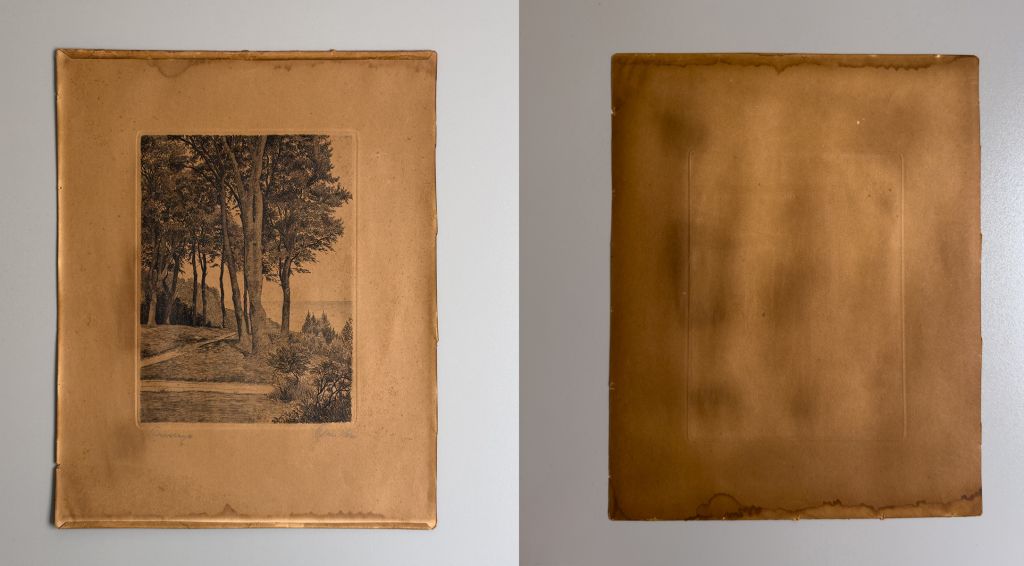
Not all mountboards are created equal. Mass-produced, budget framing mats are made from unrefined wood pulp containing high levels of lignin—the organic compound that gives wood its strength, but also causes paper to turn yellow and brittle over time.
As acidic wood pulp ages inside a sealed frame:
It releases acidic gas into the micro-environment around the artwork.
Acid migrates directly into the artwork’s paper fibers.
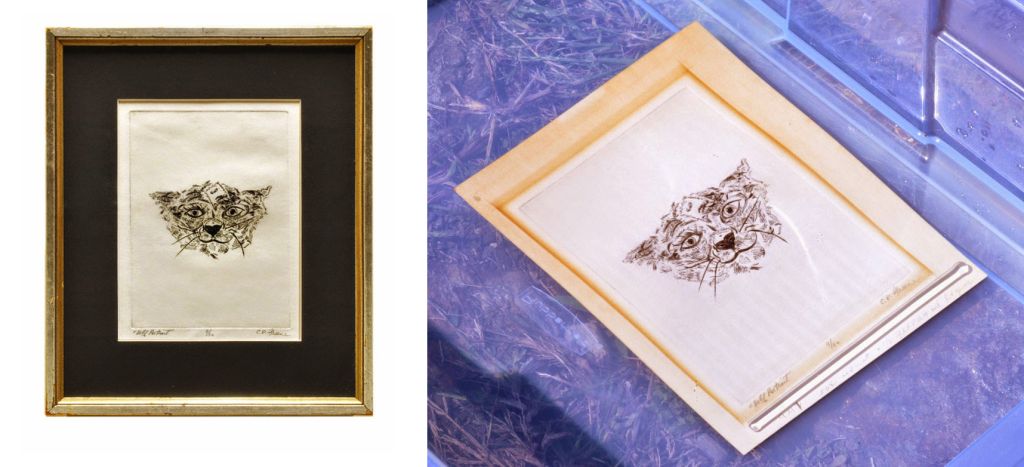
Dark, irreversible yellow/brown lines form along the cut edges—a phenomenon known in galleries as “mat burn.”
What Defines a True Archival Mountboard?
To guarantee protection for commercial and limited-edition display, industry guidelines such as the Fine Art Trade Guild (FATG) Standards categorize mountboards into strict performance levels. While FATG Level 2 governs archival Conservation framing, FATG Level 3 (Commended Level) provides a high-quality, acid-free alpha-cellulose core that protects decorative prints and certificates from core yellowing.
Elevate and Protect Your Art Collection with VG-Lab
At VG-Lab, fine art conservation is at the core of everything we do. We believe framing should enhance artwork aesthetically while acting as a vault against environmental decay.
That is why VG-Lab uses premium Munken Mount Board – manufactured in Sweden from 100% virgin alpha-cellulose fibers. Acid-free, wood-free, and FSC® certified, Munken boards ensure your fine art prints, photography, and certificates remain as vibrant decades from now as the day they were created.
Ready to Frame Your Collection Safely?
Upload & Preview: Test your artwork with custom archival mountboard layouts instantly on our newly launched VG-Lab Web2Print v2 Platform.
Consult an Expert: Contact our studio team to discuss gallery-grade framing and museum acrylic pairings.